Join our fixed departure treks.  4.9 of 421 reviews
 4.9 of 110 reviews
4.9 of 421 reviews 4.9 of 110 reviews 

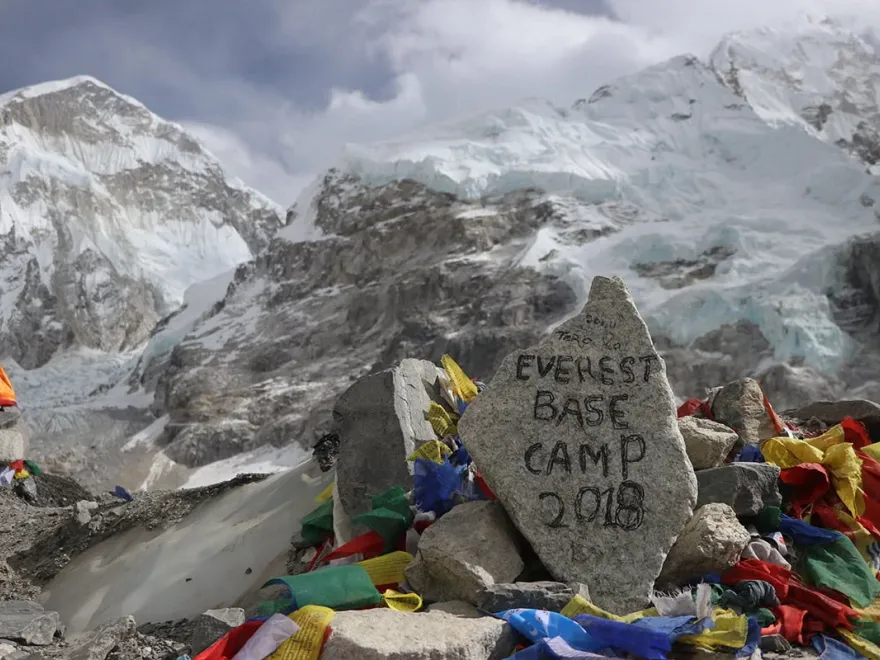


Experience the unforgettable Everest Base Camp Trek (5,364 m) with Outdoor Himalayan Treks. Discover breathtaking Himalayan peaks, authentic Sherpa culture, and spectacular mountain landscapes with a well-planned itinerary, experienced guides, proper acclimatization, and reliable trekking support.
The Everest Base Camp Trek is unquestionably one of the most iconic trekking adventures in the world and a dream destination on every trekker’s bucket list. Located in Nepal’s magnificent Khumbu region, Everest Base Camp sits at an elevation of 5,364 meters (17,598 feet) beneath the world’s highest mountain, Mount Everest (8,848.86 m). This remarkable journey offers an unforgettable combination of spectacular Himalayan landscapes, traditional Sherpa culture, ancient Buddhist monasteries, beautiful mountain villages, and breathtaking views of some of the highest peaks on Earth. Organized by Outdoor Himalayan Treks, this 15-day adventure provides an opportunity to experience the natural beauty and cultural richness of the Everest region while gradually approaching the foot of Mount Everest.
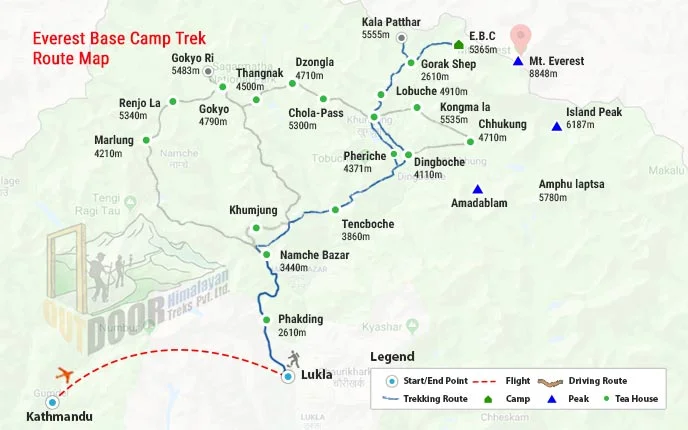
The Everest Base Camp Trek begins with your arrival in Kathmandu, Nepal’s vibrant capital city, where our representative from Outdoor Himalayan Treks welcomes you and transfers you to your hotel. The following day is dedicated to trek preparation, including permit arrangements, documentation, and a detailed briefing. You can also explore Kathmandu’s UNESCO World Heritage Sites if time permits. The actual trekking adventure begins with a scenic mountain flight from Kathmandu or Ramechhap to Lukla (2,860 m), followed by a beautiful walk through the Dudh Koshi Valley towards Phakding. As you continue, the trail passes through picturesque Sherpa settlements, suspension bridges decorated with colorful prayer flags, pine forests, and spectacular mountain scenery.
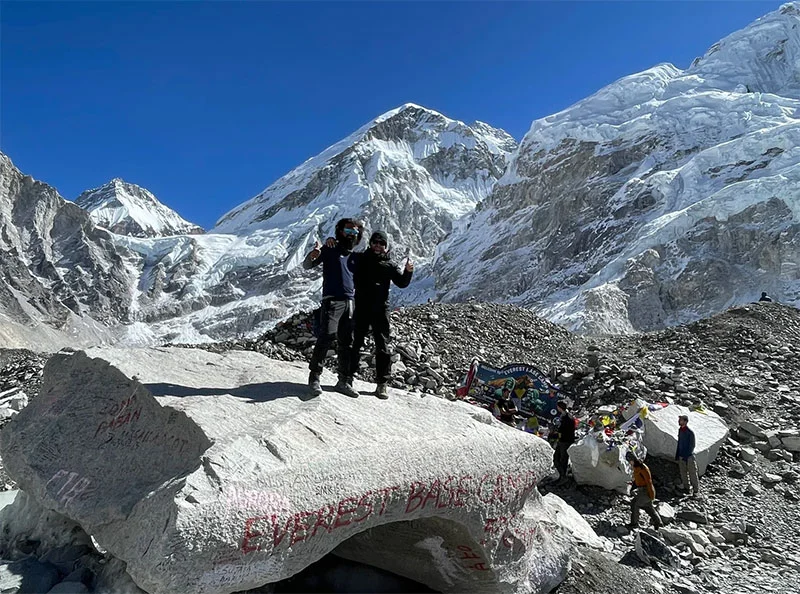
One of the major highlights of this journey is Namche Bazaar (3,440 m), the vibrant Sherpa capital and an important trading center in the Everest region. After an acclimatization day exploring Everest View Hotel or Khumjung Village, you continue towards Tengboche (3,867 m), home to the famous Tengboche Monastery. The trail then climbs gradually through beautiful alpine landscapes to Dingboche (4,410 m), Lobuche (4,940 m), and Gorakshep (5,164 m). From Gorakshep, you undertake the unforgettable hike to Everest Base Camp (5,364 m), where you can experience the extraordinary atmosphere of the world's most famous mountaineering destination.
Another major highlight is the early morning ascent of Kala Patthar (5,644.5 m), the highest point of this trekking itinerary. From here, you can enjoy breathtaking panoramic views of Mount Everest, Lhotse, Nuptse, Pumori, and surrounding Himalayan giants. After completing these incredible experiences, you descend through Pheriche, Tengboche, and Namche Bazaar before reaching Lukla for your return flight to Kathmandu.
Throughout the journey, Outdoor Himalayan Treks provides experienced trekking guides, necessary logistical arrangements, and comfortable teahouse accommodation to make your adventure enjoyable and well-organized.
Choosing the right season is an important part of planning a successful Everest Base Camp Trek. The Everest region experiences significant seasonal changes because of its high altitude and Himalayan geography. Weather conditions, temperature, visibility, snowfall, and trail conditions can influence your overall trekking experience. Generally, spring (March to May) and autumn (September to November) are considered the most favorable seasons for the Everest Base Camp Trek. During these periods, trekkers can enjoy relatively stable weather, clearer mountain views, and suitable daytime temperatures for walking through the beautiful Khumbu Valley.
Spring Season (March to May)
Spring is one of the most popular seasons for trekking to Everest Base Camp. During these months, the weather gradually becomes warmer, and the trails are decorated with colorful rhododendron flowers, blooming forests, and fresh mountain vegetation at lower elevations. The skies are often clear in the mornings, offering excellent views of Everest, Ama Dablam, Lhotse, Nuptse, and other Himalayan peaks. Spring is also the main Everest climbing season, so you may encounter mountaineering teams preparing for their summit attempts and experience the lively atmosphere around Everest Base Camp.
March can still be cold, particularly at higher elevations, while April and May generally bring warmer daytime temperatures. However, afternoon clouds, occasional snowfall, and changing mountain weather are possible.
Autumn Season (September to November)
Autumn is another excellent season for the Everest Base Camp Trek. Following the summer monsoon, the atmosphere becomes clearer, the landscapes appear fresh, and mountain visibility generally improves. September may still experience occasional rainfall, especially during the early part of the month, while October and November usually offer excellent trekking conditions. The clear blue skies and impressive Himalayan panoramas make autumn particularly attractive for photography and mountain exploration.
Autumn also coincides with major Nepalese festivals such as Dashain and Tihar, providing an opportunity to experience Nepalese traditions and cultural celebrations.
Other Seasons
Although spring and autumn are the most popular, the Everest Base Camp Trek is possible during other seasons with appropriate preparation.
Outdoor Himalayan Treks recommends spring and autumn for trekkers seeking a combination of favorable weather, mountain visibility, and comfortable trekking conditions. Nevertheless, Himalayan weather can change quickly, and no season guarantees perfect conditions throughout the journey.
The Everest Base Camp Trek is considered a moderate to challenging high-altitude trekking adventure. It does not require technical mountaineering skills or previous climbing experience, but it demands good physical fitness, mental preparation, and the ability to walk for several hours each day. The 15-day itinerary includes approximately 11 days of trekking, with daily walking times generally ranging from 4 to 8 hours depending on the route, altitude, weather, and individual walking pace.
The main difficulty of this trek comes from the increasing altitude rather than technical trail conditions. As you move from Lukla (2,860 m) towards Namche Bazaar, Tengboche, Dingboche, Lobuche, and Everest Base Camp, the oxygen level in the atmosphere decreases. This makes walking more physically demanding, particularly above 4,000 meters. Trekkers may experience breathlessness, fatigue, headaches, or other symptoms associated with altitude sickness. Therefore, gradual ascent, proper hydration, adequate nutrition, and acclimatization are essential.
Outdoor Himalayan Treks includes an acclimatization day in Namche Bazaar, allowing your body time to adjust to the increasing elevation. During this day, you can enjoy a short hike towards Everest View Hotel or Khumjung Village before returning to Namche. Walking slowly, maintaining a comfortable pace, and following your guide's advice are important throughout the journey. Our trekking guides help monitor your condition and provide guidance on safe altitude progression.
Transportation During the Everest Base Camp Trek
Transportation is an important part of the Everest Base Camp adventure. Since the Khumbu region does not have conventional road access to most trekking destinations, the journey combines private road transportation, domestic flights, and walking.
The Lukla flight is highly dependent on weather conditions, so delays and cancellations are possible. Outdoor Himalayan Treks recommends keeping some additional time in your travel schedule for unexpected flight disruptions.
Food and accommodation are essential considerations when planning the Everest Base Camp Trek. Throughout the journey, trekkers stay in traditional mountain teahouses and lodges that provide a welcoming environment after a long day of walking. These accommodations are generally family-operated and offer an opportunity to experience the hospitality and lifestyle of local Sherpa communities. Outdoor Himalayan Treks arranges suitable teahouse accommodation along the trekking route, considering availability, location, and comfort.
In Kathmandu, accommodation is generally arranged in a comfortable tourist-standard hotel, where you can enjoy private rooms, modern facilities, hot showers, and other basic amenities. Once the trekking adventure begins in Lukla, Phakding, Namche Bazaar, Tengboche, Dingboche, Lobuche, and Gorakshep, accommodation becomes simpler as you move into higher elevations. Most teahouses provide twin-sharing rooms with basic beds, mattresses, pillows, and blankets. Bathrooms may be shared, particularly in higher-altitude villages. Hot showers, Wi-Fi, device charging, and other additional facilities may be available for an extra charge, depending on the lodge.
At higher elevations, especially in Lobuche and Gorakshep, accommodation facilities are more basic because of the remote mountain environment. During the busy trekking seasons, rooms may become limited, so advance arrangements are important.
Food During the Everest Base Camp Trek
Teahouses along the Everest Base Camp trail offer a variety of meals to meet the needs of international trekkers. You can enjoy traditional Nepalese dishes, Tibetan-inspired meals, and familiar international food options. Dal Bhat, consisting of rice, lentil soup, vegetables, and pickles, is one of the most popular meals because it provides energy for long trekking days.
Common food options include:
As you gain altitude, the availability of fresh food and menu choices may become more limited. Eating balanced meals, maintaining adequate hydration, and avoiding excessive alcohol consumption are recommended.
Outdoor Himalayan Treks provides meal arrangements according to the selected trekking package. Trekkers should confirm whether breakfast, lunch, and dinner are included in their package and budget separately for personal snacks, drinks, and additional refreshments where applicable.
The Everest Base Camp Trek requires official trekking permissions to enter and explore the Khumbu region. These permits are essential for maintaining trekking regulations, managing visitor records, and supporting conservation and local development activities. Before beginning the trek, trekkers must complete the necessary documentation and obtain the applicable permits. Outdoor Himalayan Treks assists with the required paperwork and permit arrangements during the preparation day in Kathmandu or through the appropriate local authorities.
For the standard Everest Base Camp trekking route, trekkers generally require the following permissions:
1. Khumbu Pasang Lhamu Rural Municipality Entrance Permit
This local entrance permit is required for visitors entering the Khumbu region. It supports local infrastructure, tourism management, and community development. The permit is generally obtained through the authorized local checkpoint after arriving in the region, commonly around Lukla or Monjo, depending on the applicable arrangements.
2. Sagarmatha National Park Entry Permit
The Everest Base Camp trail passes through Sagarmatha National Park, a UNESCO World Heritage Site famous for its extraordinary Himalayan landscapes, wildlife, glaciers, and mountain ecosystems. The national park permit is required to enter the protected area and helps support conservation activities.
The park is home to remarkable natural features, including Mount Everest, the Khumbu Glacier, alpine forests, and wildlife such as Himalayan tahr, musk deer, and several bird species.
Important Permit Information
How Outdoor Himalayan Treks Helps With Permits
Outdoor Himalayan Treks assists trekkers with the required documentation and permit arrangements before and during the journey. Our team helps ensure that the necessary permissions are organized so you can focus on enjoying the Himalayan adventure rather than worrying about administrative procedures.
Permit fees and requirements can change, so we recommend confirming the latest applicable regulations and costs with Outdoor Himalayan Treks before departure.
Choosing the right trekking company is an important part of planning a successful Everest Base Camp adventure. Trekking in the high Himalayas requires careful organization, experienced guides, appropriate acclimatization planning, reliable logistics, and an understanding of local mountain conditions. Outdoor Himalayan Treks is dedicated to providing memorable Himalayan adventures through professional trekking services, local expertise, and personalized travel arrangements.
Our Everest Base Camp Trek package is designed to provide a rewarding 15-day experience, beginning with your arrival in Kathmandu and ending with your return after exploring the iconic Everest region. From airport pickup and hotel arrangements to trekking permits, domestic flight coordination, teahouse accommodation, and guide services, our team helps organize the essential aspects of your journey.
One of the important reasons to choose Outdoor Himalayan Treks is our focus on local knowledge and cultural experiences. Our trekking guides understand the trails, mountain environment, local traditions, and challenges associated with high-altitude trekking. They help you maintain a comfortable walking pace, understand the surrounding landscapes, and experience the unique hospitality of Sherpa communities. Whether you are exploring Namche Bazaar, visiting Tengboche Monastery, crossing the Khumbu Glacier moraine, or standing at Everest Base Camp, our team aims to make your journey safe, enjoyable, and memorable.
We also understand that every trekker has different expectations and physical abilities. Our itinerary includes an acclimatization day in Namche Bazaar and a gradual progression through the major trekking settlements. Our team provides guidance throughout the journey and helps coordinate necessary arrangements if weather conditions or mountain circumstances require itinerary adjustments.
Reasons to Choose Outdoor Himalayan Treks:
With Outdoor Himalayan Treks, the Everest Base Camp journey is more than simply reaching the foot of the world's highest mountain. It is an opportunity to discover Nepal's natural beauty, experience authentic Himalayan culture, challenge your personal limits, and create lifelong memories in the heart of the Himalayas. Whether you are an experienced trekker or a first-time Himalayan adventurer with suitable fitness and preparation, our team is ready to help you make your Everest Base Camp dream a reality.
The 15-day Everest Base Camp Trek with Outdoor Himalayan Treks is an incredible Himalayan adventure that takes you through the breathtaking landscapes of the Khumbu region, traditional Sherpa villages, ancient Buddhist monasteries, and spectacular mountain scenery. Starting from Kathmandu, the journey includes a scenic flight to Lukla, followed by trekking through Phakding, Namche Bazaar, Tengboche, Dingboche, and Lobuche before reaching the iconic Everest Base Camp at 5,364 meters.
Along the way, you will enjoy an acclimatization day in Namche Bazaar, experience the unique Sherpa culture, and witness magnificent views of Everest, Ama Dablam, Lhotse, and Nuptse. The adventure also includes an early morning hike to Kala Patthar (5,644.5 m), offering unforgettable panoramic mountain views. With experienced guides and reliable support from Outdoor Himalayan Treks, this journey promises a memorable Himalayan experience.
The Everest Base Camp Trek with Outdoor Himalayan Treks requires proper planning and preparation to ensure a comfortable, enjoyable, and safe Himalayan adventure. Before departure, trekkers should understand the transportation arrangements, teahouse accommodation, local food, payments, travel insurance, trekking permits, cultural practices, weather conditions, and high-altitude safety precautions. Our team provides essential information, local guidance, and trekking support throughout your 15-day journey.

Transportation: Airport transfers in Kathmandu, domestic flights to and from Lukla, and road transportation to Ramechhap when required. Lukla flights are weather-dependent and may experience delays.

Accommodation and Meals: Tourist-standard hotel accommodation in Kathmandu and comfortable mountain teahouses during the trek. Meals generally include Dal Bhat, noodles, soups, rice, pasta, eggs, and other local and international dishes.

Money, Payments and Insurance: Carry sufficient Nepalese cash for personal expenses, snacks, hot showers, Wi-Fi, and charging facilities. Travel insurance must cover high-altitude trekking up to 5,645 m and emergency helicopter evacuation.

Travel Documents and Permits: Bring a valid passport, Nepal visa, necessary photographs, and required trekking permits, including the Sagarmatha National Park Entry Permit and Khumbu Pasang Lhamu Rural Municipality Permit.

Local Language and Sightseeing: Learn simple Nepali greetings such as Namaste and Dhanyabad. Explore Namche Bazaar, Tengboche Monastery, Khumjung Village, and Everest View Hotel while respecting local Sherpa traditions and Buddhist customs.

Off-the-Beaten-Path Experiences: Discover traditional Sherpa settlements, peaceful mountain villages, hidden viewpoints, local monasteries, and authentic Himalayan lifestyles beyond the main trekking trail.

Weather and Travel Advisory: Spring (March–May) and autumn (September–November) are popular trekking seasons. Prepare for changing temperatures, possible snowfall, flight disruptions, and unexpected weather conditions.

Health and Safety: Maintain a gradual walking pace, stay hydrated, follow acclimatization guidelines, carry personal medication, and inform your guide immediately about altitude sickness symptoms. Follow professional guidance regarding rest and emergency descent.
Your Start Date is the day you land in Nepal, and your End Date is when you fly home.
If the set Everest Base Camp Trek group dates don’t suit your schedule, we can offer alternative dates upon request.